Have you ever checked Google Search Console and noticed that your web pages are indexed, but they still don’t appear in Google search results? If yes, you’re not alone.
Many website owners, bloggers, and digital marketers think that once a page is indexed, it will automatically rank on Google. Unfortunately, that’s not how SEO works.
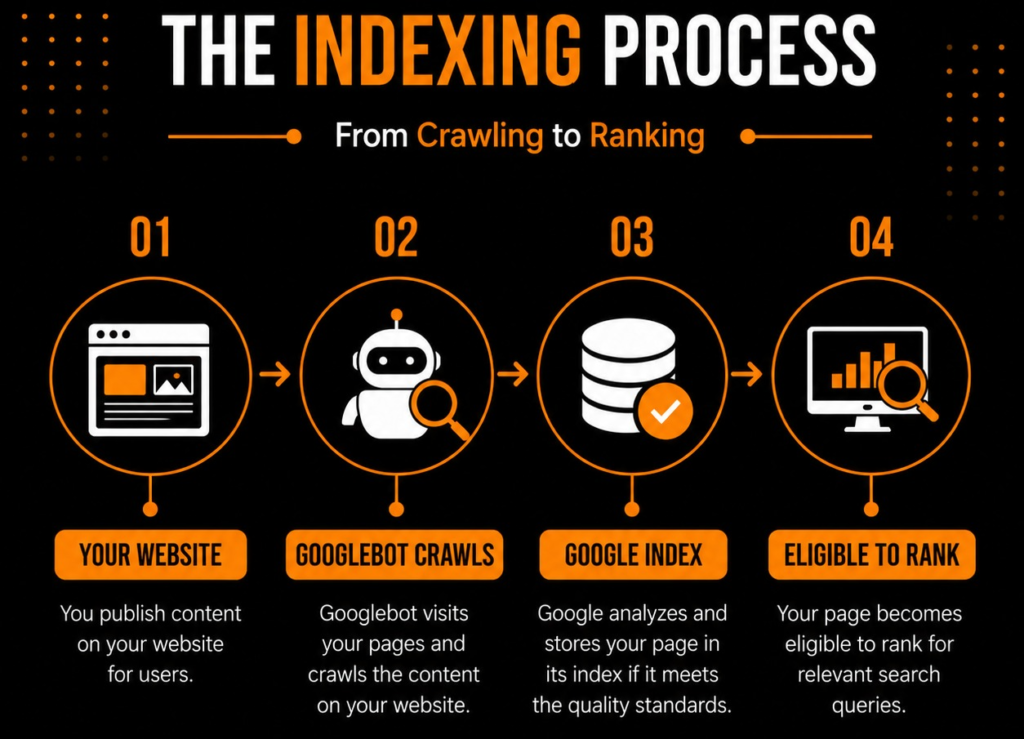
Indexing simply means Google has discovered and stored your page in its database. Ranking means Google believes your page is one of the best answers for a user’s search query.
In this blog, you’ll learn why your website gets indexed but doesn’t rank, the most common reasons behind this issue, and practical ways to improve your rankings.
Before understanding why your page isn’t ranking, it’s important to know what indexing actually means.
Google uses automated programs called Googlebots to discover web pages. These bots crawl your website, read the content, and decide whether it should be added to Google’s search index.
When a page is indexed, Google knows it exists. However, indexing is only the first step.
Your page still needs to compete with thousands—or sometimes millions—of other pages targeting the same topic.
Think of Google’s index as a massive digital library. Getting indexed is like placing your book on the library shelf. Ranking is when the librarian recommends your book to readers because it’s the most useful.
Google’s goal is simple: provide users with the most helpful, accurate, and trustworthy information.
If Google believes another page offers a better answer, it will rank that page above yours—even if your page is indexed.
Several factors influence rankings, including content quality, relevance, authority, user experience, and technical SEO.
Let’s look at the most common reasons
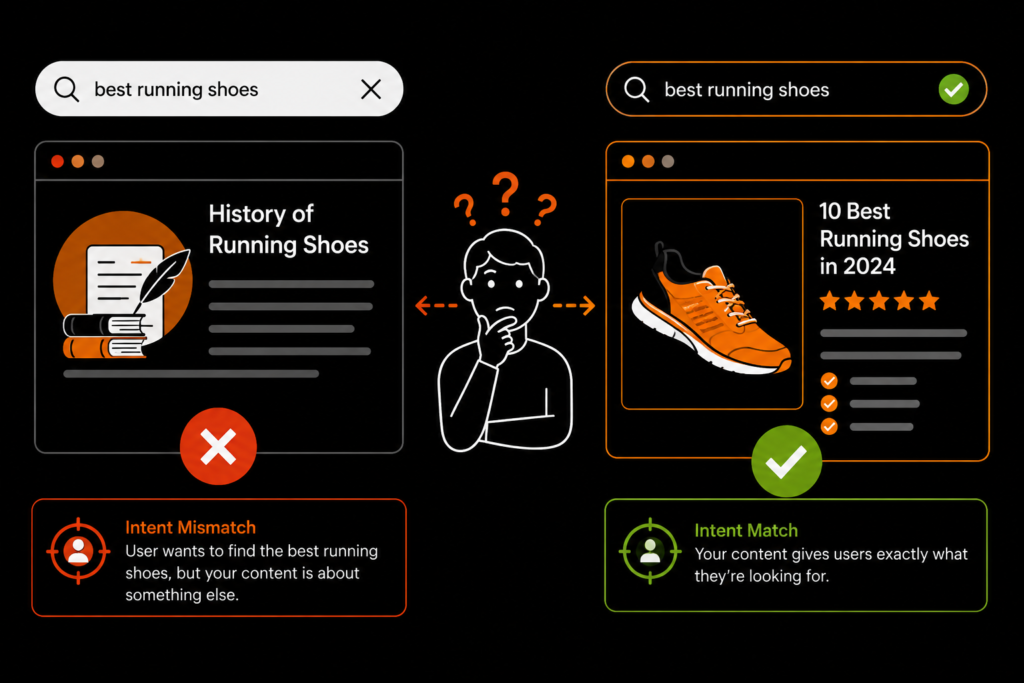
Search intent refers to what users expect to find when they type a query into Google.
For example, someone searching for “best free SEO tools” expects a list of tools, not a general explanation of SEO.
If your content doesn’t satisfy the user’s intent, Google is unlikely to rank it well.
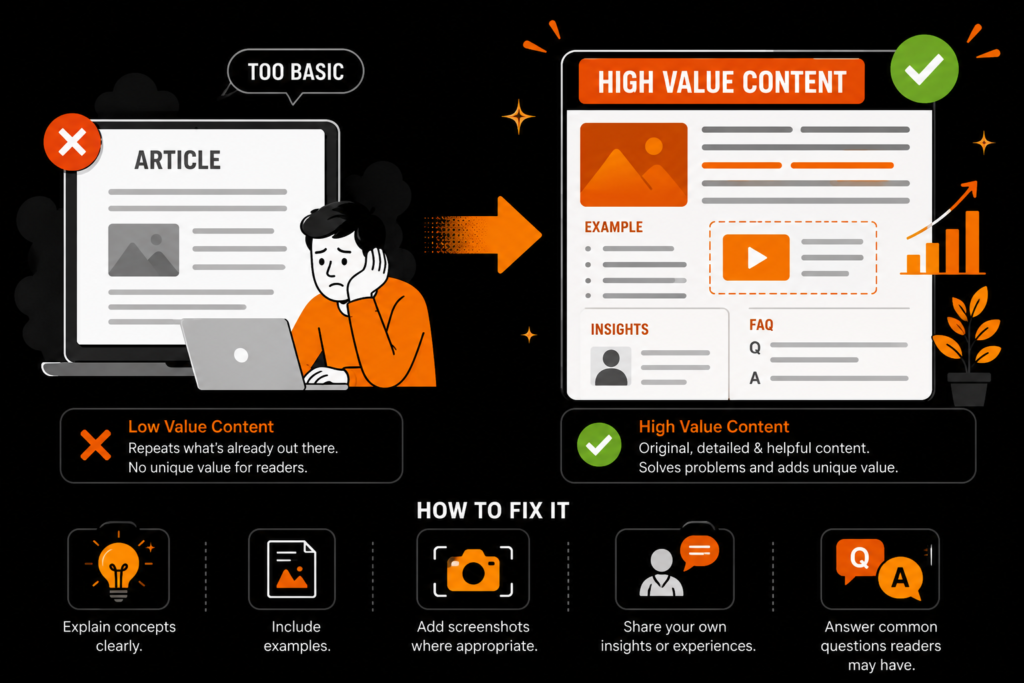
Publishing a short article with basic information is no longer enough.
Google prefers content that is original, detailed, and genuinely helpful.
If your article simply repeats information available on hundreds of other websites, Google has little reason to rank it.
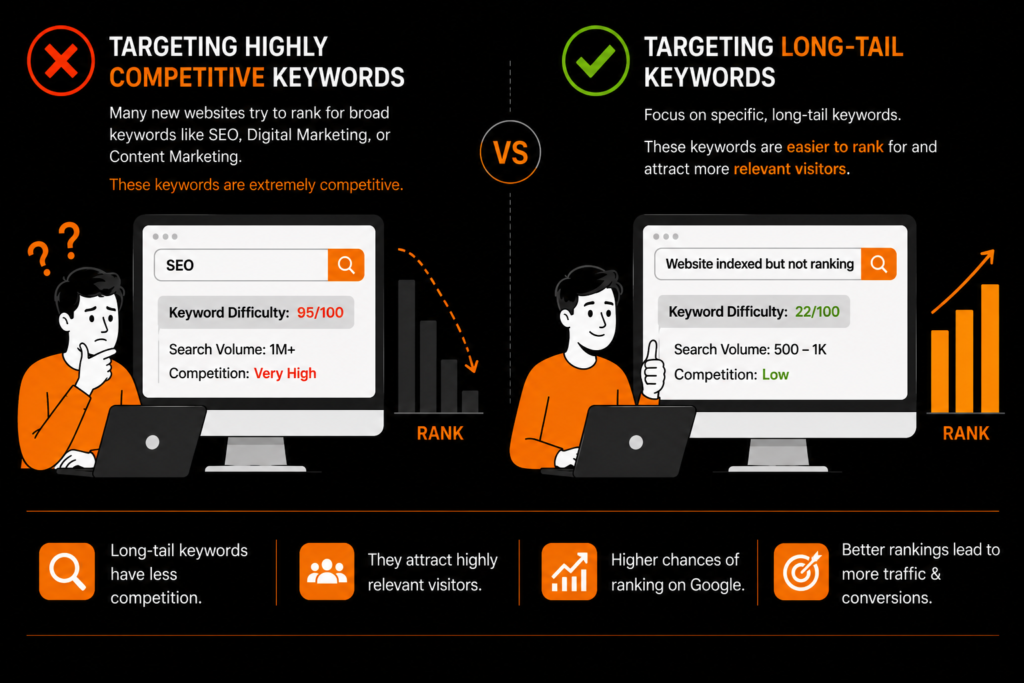
Many new websites try to rank for broad keywords like SEO, Digital Marketing, or Content Marketing.
These keywords are extremely competitive.
Instead of targeting broad keywords, focus on long-tail keywords such as:
These keywords are often easier to compete for and attract more relevant visitors.
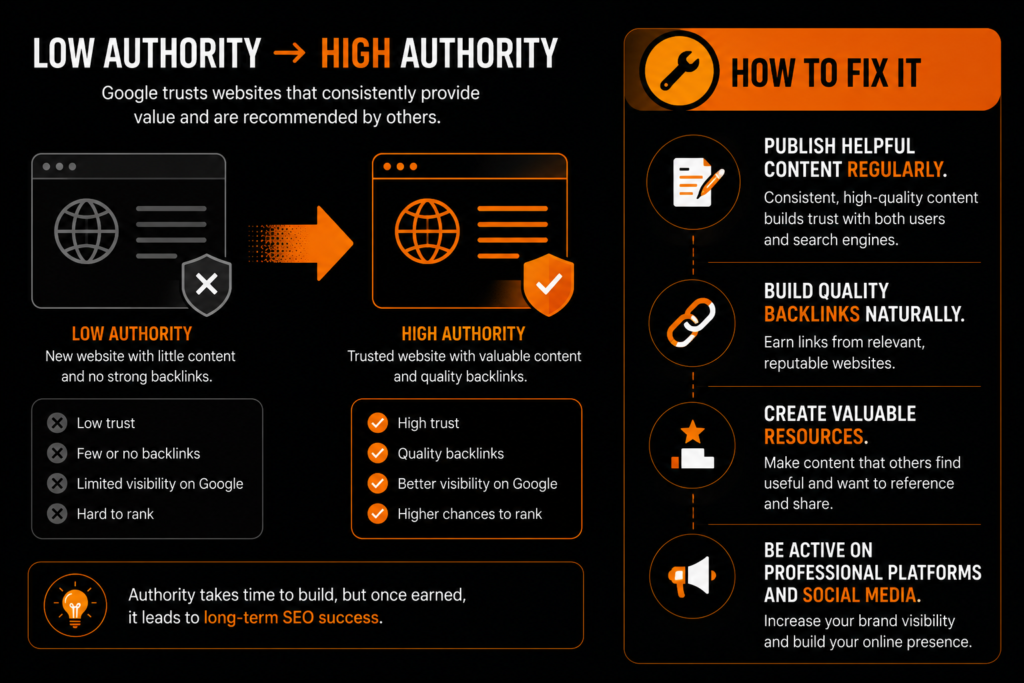
Google naturally trusts websites that have consistently published useful content over time and earned links from other reputable websites.
New websites usually need time to build this trust.
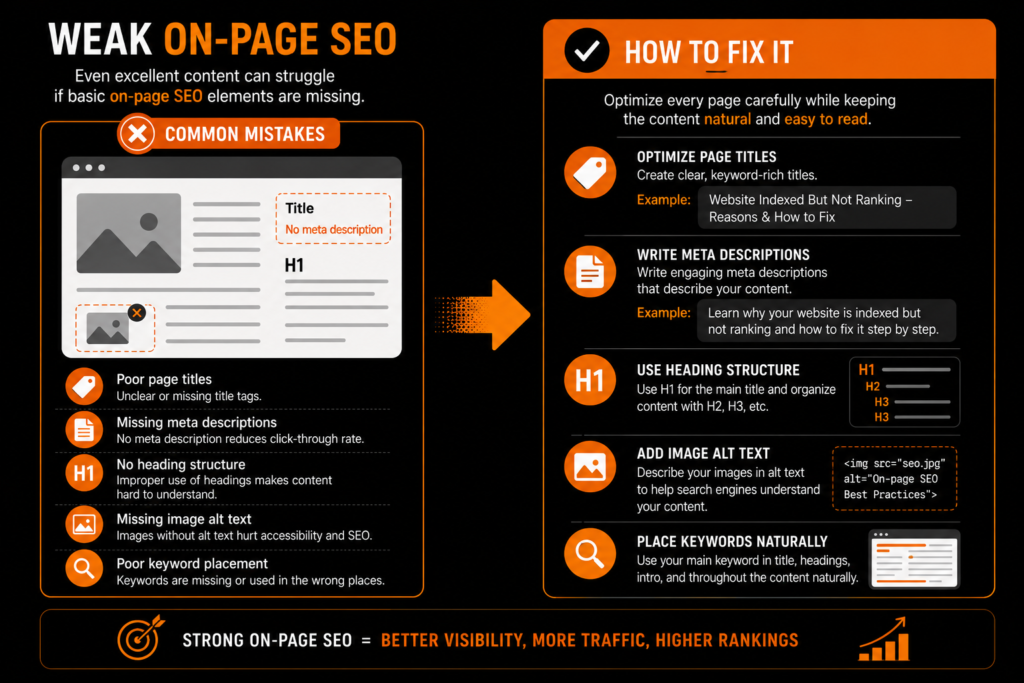
Even excellent content can struggle if basic on-page SEO elements are missing.
Common mistakes include:
Optimize every page carefully while keeping the content natural and easy to read.
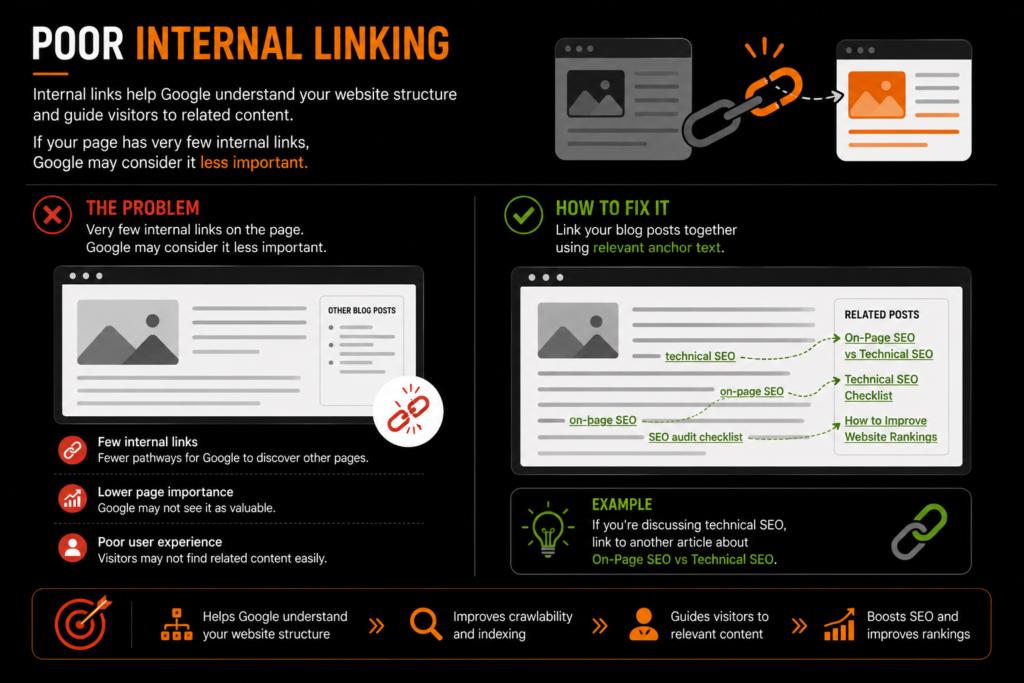
Internal links help Google understand your website structure and guide visitors to related content.
If your page has very few internal links, Google may consider it less important.
Link your blog posts together using relevant anchor text.
For example, if you’re discussing technical SEO, link to another article about On-Page SEO vs Technical SEO.
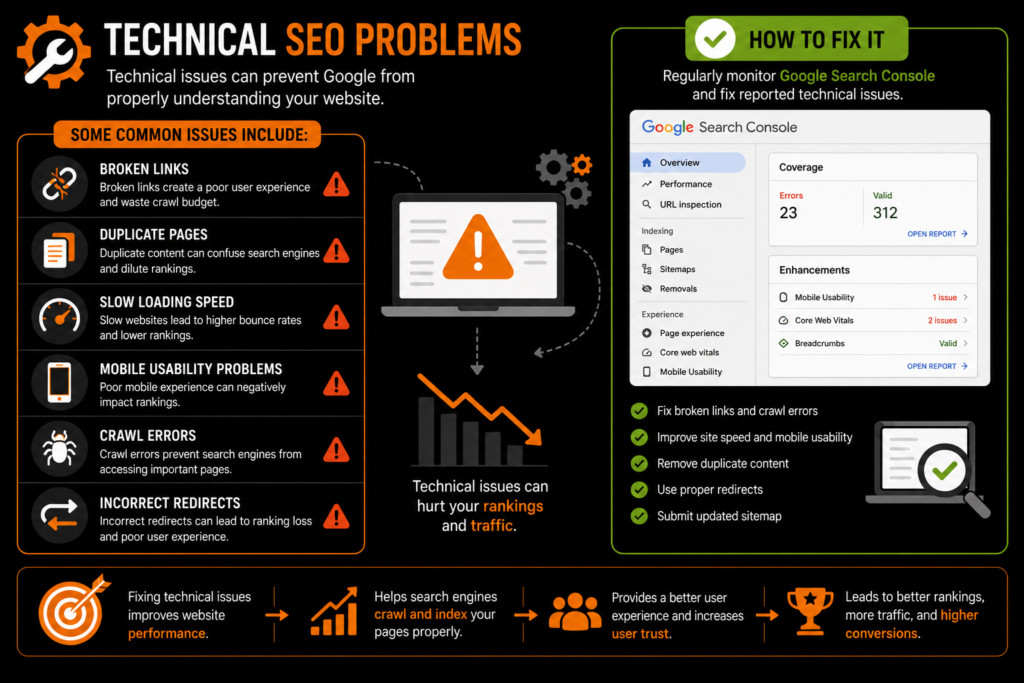
Technical issues can prevent Google from properly understanding your website.
Some common issues include:
Regularly monitor Google Search Console and fix reported technical issues.
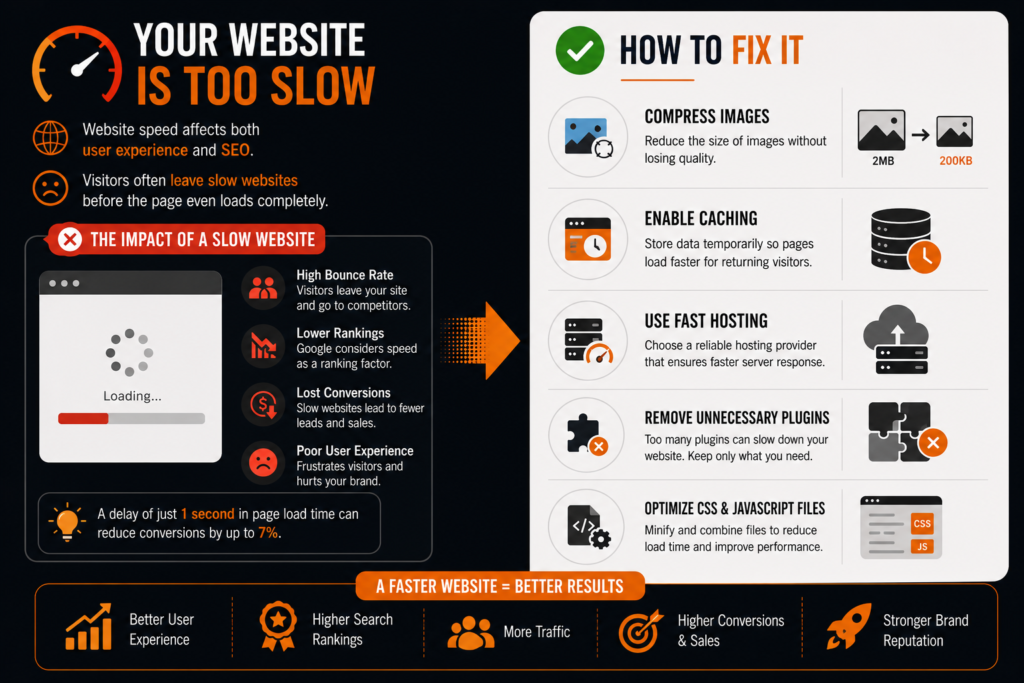
Website speed affects both user experience and SEO.
Visitors often leave slow websites before the page even loads completely.
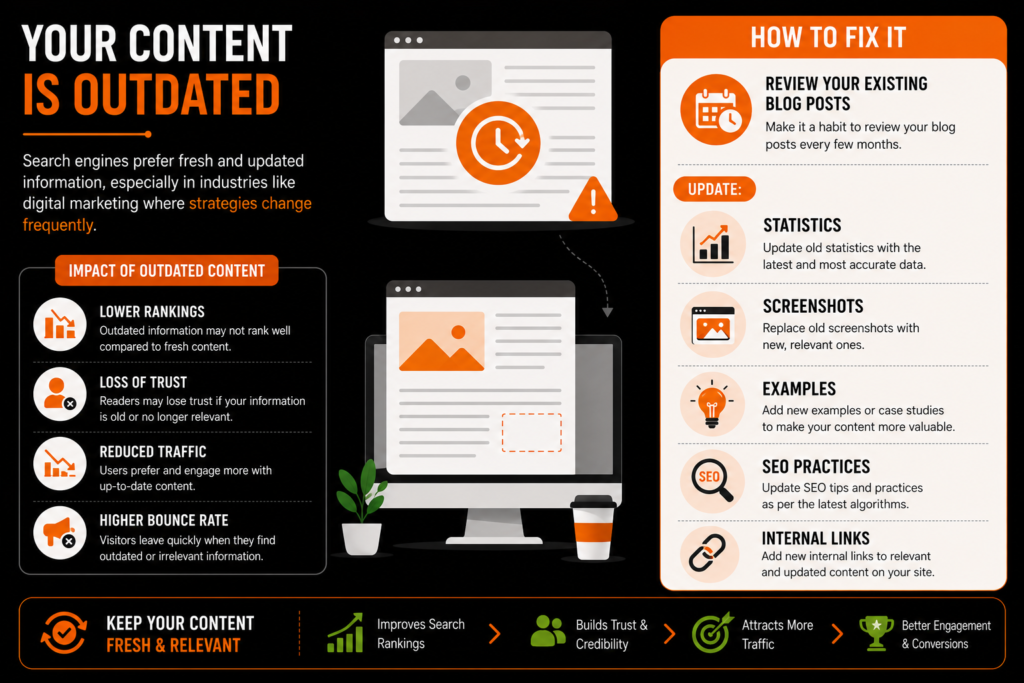
Search engines prefer fresh and updated information, especially in industries like digital marketing where strategies change frequently.
Review your existing blog posts every few months.
Update:
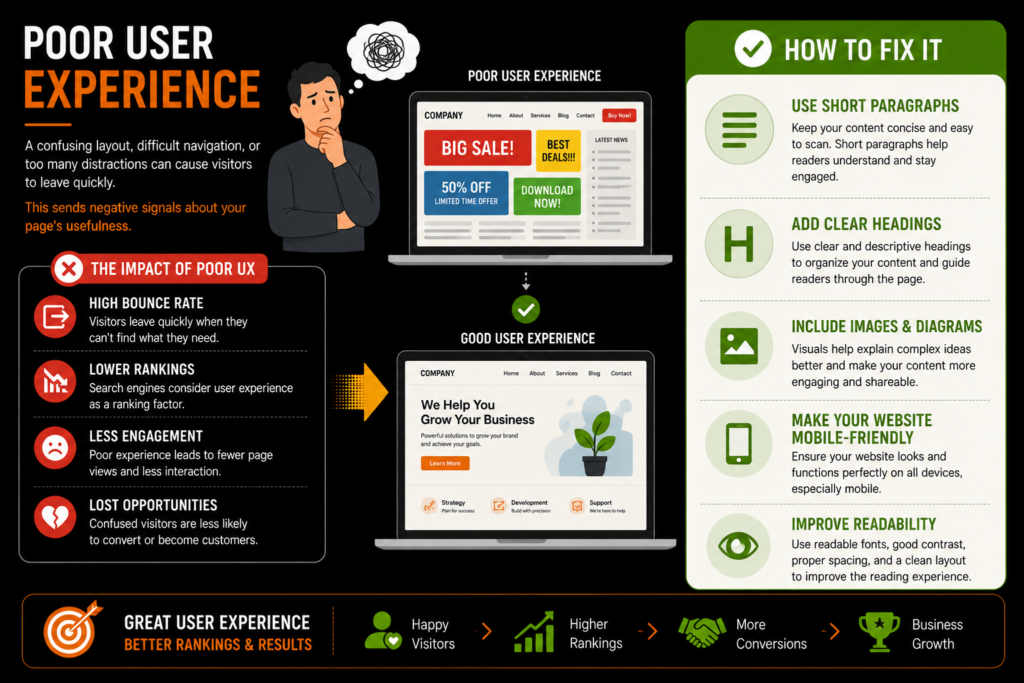
A confusing layout, difficult navigation, or too many distractions can cause visitors to leave quickly.
This sends negative signals about your page’s usefulness.
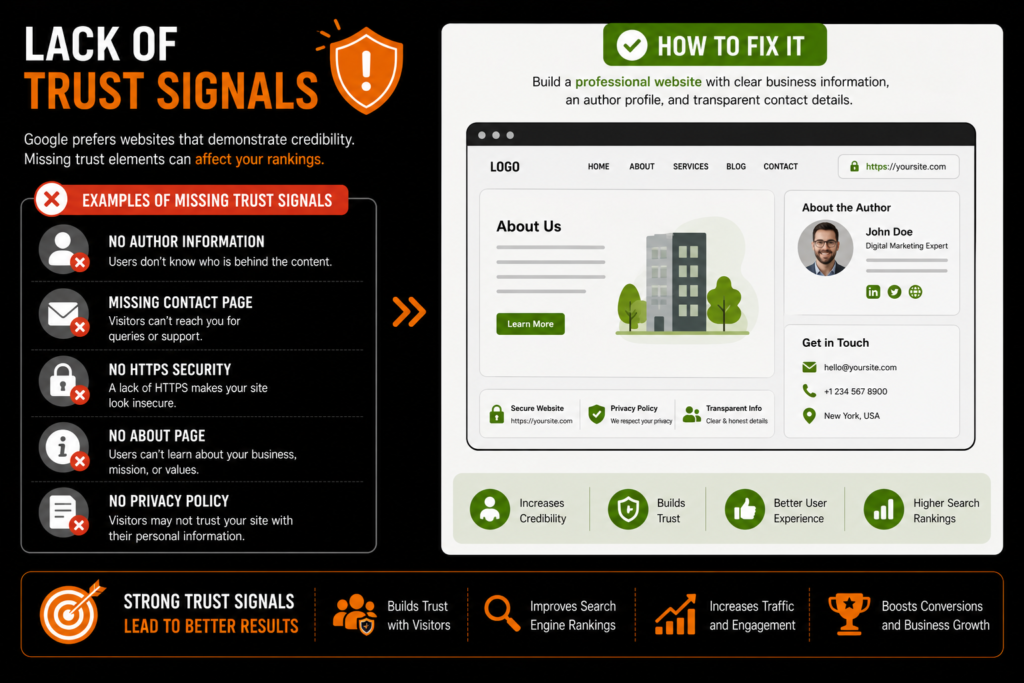
Google prefers websites that demonstrate credibility.
Missing trust elements can affect your rankings.
Examples include:
Build a professional website with clear business information, an author profile, and transparent contact details.
If your website is indexed but not ranking, follow these practical steps:
✅ Research keywords carefully before writing.
✅ Publish original, helpful content.
✅ Improve on-page SEO.
✅ Build strong internal links.
✅ Fix technical SEO issues.
✅ Improve website speed.
✅ Update old content regularly.
✅ Earn quality backlinks naturally.
✅ Monitor your performance using Google Search Console.
Small improvements made consistently can produce significant long-term results.
Getting indexed is only the beginning of your SEO journey. Ranking requires much more than simply appearing in Google’s index.
Focus on creating valuable content, improving your website’s technical performance, understanding your audience’s search intent, and building trust over time.
SEO is not about finding shortcuts. It’s about consistently delivering the best possible experience for your visitors.
If your website is indexed but not ranking today, don’t lose motivation. Keep improving your content, monitor your website’s performance, and stay consistent. With patience and continuous optimization, your rankings can improve.
© 2026 Fathima Hina. All Rights Reserved